
For decades, treating depression with brain stimulation meant a trip to a clinic or hospital, often several times a week. That changed in 2025 and 2026, when the FDA approved the first two prescription devices for depression that patients use at home: Flow (FL-100) and Proliv Rx. Both are available through Atlas Psychiatry. Here's what they are, how they work, and who they may help.
What is neuromodulation?
Neuromodulation means gently changing the activity of nerve cells by delivering a targeted signal — usually a small electrical current or a magnetic field — to specific parts of the nervous system. In depression, the goal is to "retune" brain circuits that regulate mood, energy, and motivation.
It's not new. A quick timeline of FDA-recognized options for depression:
- Electroconvulsive therapy (ECT), 1938: The oldest and still one of the most effective treatments for severe depression. Done under general anesthesia in a hospital or procedure setting.
- Vagus nerve stimulation (VNS), 2005: A surgically implanted device that stimulates the vagus nerve in the neck. Used for long-standing, hard-to-treat depression.
- Transcranial magnetic stimulation (TMS), 2008: Magnetic pulses from a coil held against the scalp. No anesthesia, but it requires frequent clinic visits, often daily for several weeks.
- Transcranial direct current stimulation (tDCS), 2025: Flow, the first at-home device.
- External combined occipital and trigeminal afferent stimulation (eCOT-AS), 2026: Proliv Rx, the second at-home device.
(Deep brain stimulation, which uses surgically implanted electrodes, is still considered investigational for depression.)
The big shift with Flow and Proliv Rx: effective, research-backed stimulation without surgery, anesthesia, or daily commutes to a clinic.
Flow (FL-100): a gentle current for the brain's "mood center"
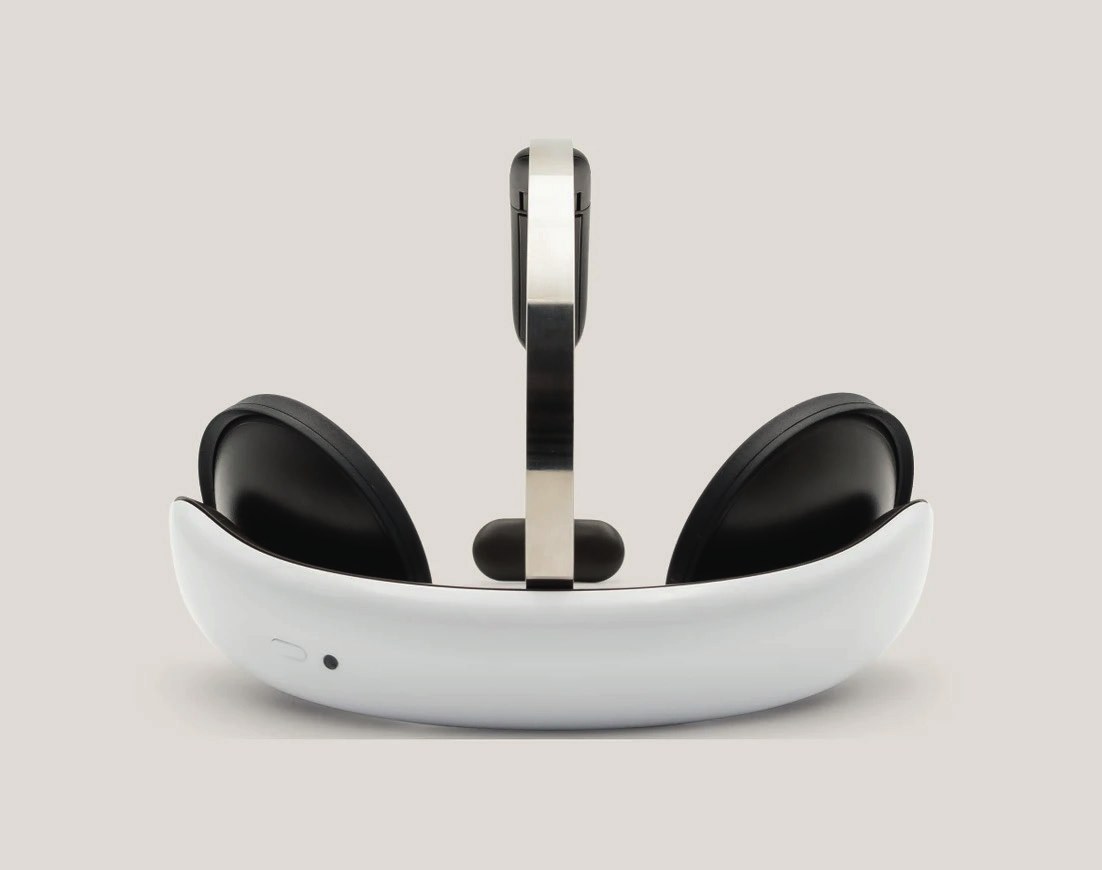
How it works: Flow is a lightweight headset that uses tDCS — a very weak electrical current (1 to 2 milliamps, far less than a phone charger) — to stimulate the left dorsolateral prefrontal cortex. This front-of-the-brain region helps regulate mood and is often underactive in depression. Most people feel only a mild tingling.
Who it's approved for: Adults 18 and older with moderate to severe major depressive disorder. It can be used on its own or alongside antidepressants or therapy. You do not need to have tried medication first. It is not intended for depression that has not improved with many treatments.
What treatment looks like: Sessions are about 30 minutes, done at home with a companion app that walks you through each step. A typical course:
- Weeks 1 to 3: 5 sessions per week
- Weeks 4 to 10: 2 to 3 sessions per week
- Maintenance: about 2 sessions per week for several months to help prevent relapse
Your psychiatrist can follow your session logs and symptom check-ins through a secure clinician portal. The app also includes optional behavioral therapy modules.
The evidence: FDA approval was based on a large, fully remote, double-blind trial published in Nature Medicine, in which people using the active device improved significantly more than those using a sham (inactive) device. Some people noticed improvement within about three weeks, and among people who responded, about 90% kept their improvement over follow-up.
Side effects: Usually mild: skin redness or irritation under the pads, headache, and, rarely, ringing in the ears, fatigue, or restlessness.
Proliv Rx: stimulating nerve pathways that feed mood circuits
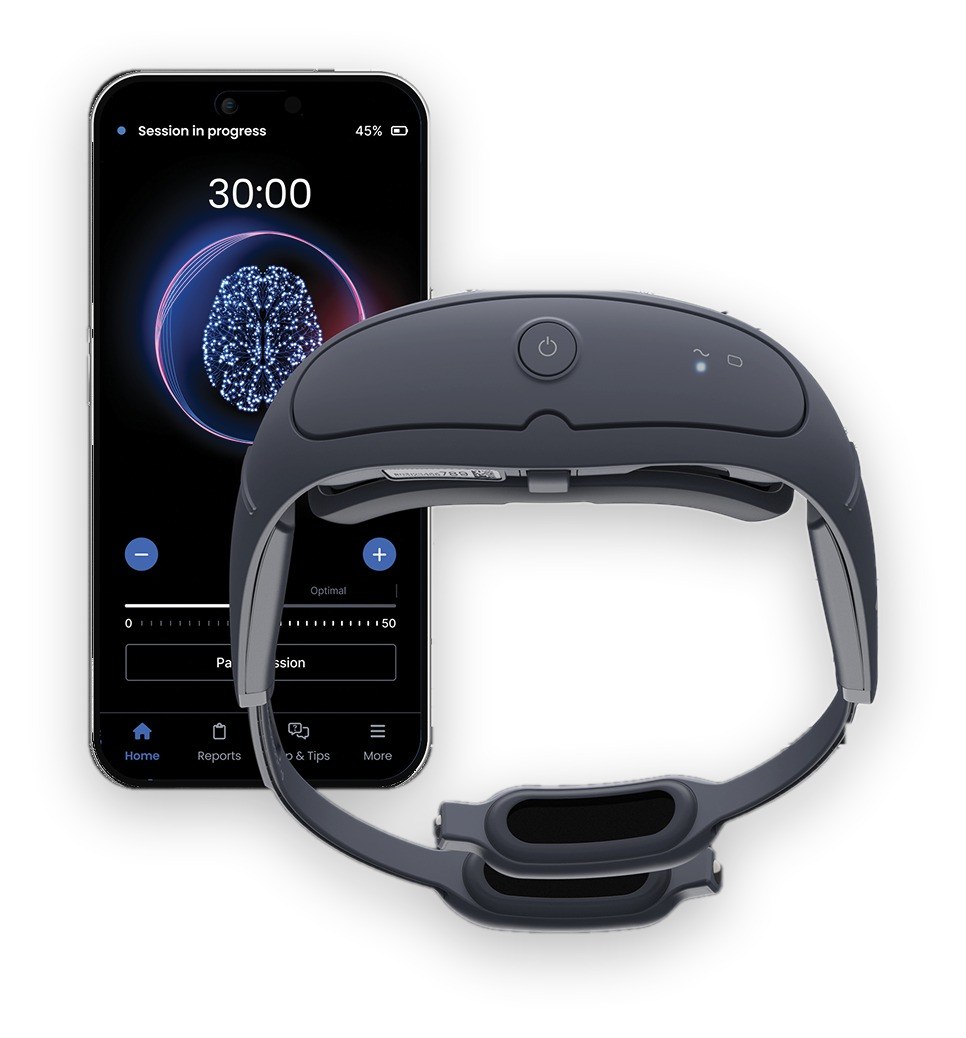
How it works: Proliv Rx is a wearable headset that delivers gentle electrical pulses to branches of two nerves: the trigeminal nerve (forehead) and the occipital nerves (back of the head). These nerves send signals into the brainstem and onward to brain networks involved in mood. The technology grew out of a similar device already FDA-cleared for migraine, where researchers noticed patients' mood also improved.
Who it's approved for: Adults with major depressive disorder whose symptoms have not improved enough with at least one antidepressant. It's used as an add-on to ongoing treatment, not a replacement.
What treatment looks like: Daily at-home sessions on a schedule your prescriber sets, over an initial 8-week course. People who do well can move to a lighter maintenance schedule; those still improving may continue another 8 weeks.
The evidence: In the double-blind MOOD study (124 participants who hadn't responded well to antidepressants), 21% of people using the active device reached remission at 8 weeks, versus 6% with sham. In an extension to 16 weeks, remission rose to about 32%. Adherence was excellent: participants completed about 97% of their sessions. Longer-term data are still being collected.
Side effects: Headache was most common. Side effects were generally mild and temporary, with no serious device-related problems reported.
Flow or Proliv Rx: which might fit?
A simple way to think about it:
- Flow may be a good option if you're early in treatment, prefer to avoid or limit medication, or want to boost the effect of an antidepressant you're already taking.
- Proliv Rx may be a good option if you've tried at least one antidepressant and still aren't feeling like yourself.
Either device may need extra caution or may not be right for you if you have a history of seizures, metal implants in the head (such as a deep brain stimulator), skin conditions on the forehead or scalp, bipolar disorder, psychosis, or current thoughts of suicide. A psychiatric evaluation helps sort this out.
Frequently asked questions
What is the difference between Flow and Proliv Rx?
Both are FDA-approved prescription headsets for major depression that you use at home. Flow uses a weak direct current (tDCS) aimed at the left prefrontal cortex and can be used on its own or with medication, without trying an antidepressant first. Proliv Rx stimulates the trigeminal and occipital nerves and is approved as an add-on for adults whose depression hasn't improved enough with at least one antidepressant.
Do I need to try an antidepressant before using Flow?
No. Flow is approved for adults with moderate to severe major depressive disorder, on its own or alongside antidepressants or therapy, without first trying medication. Proliv Rx is different: it's for people who have already tried at least one antidepressant.
How long does it take to notice a difference?
In Flow's main clinical trial, some people noticed improvement within about three weeks, and the full course runs 10 weeks. Proliv Rx is used over an initial 8-week course, and in its trial remission rates kept rising through 16 weeks. Everyone responds differently.
Are at-home brain stimulation devices safe?
In clinical trials, side effects were generally mild and temporary. Flow can cause skin redness under the pads, headache and, rarely, ringing in the ears, fatigue or restlessness. Headache was the most common side effect with Proliv Rx. Neither trial reported serious device-related problems.
Who should not use these devices?
They may not be right for people with a history of seizures, metal implants in the head, skin conditions where the electrodes sit, bipolar disorder, psychosis, or current thoughts of suicide. A psychiatric evaluation helps decide whether a device is a safe fit.
Do I need a prescription, and can I get one through Atlas Psychiatry?
Yes. Both devices require a prescription. Atlas Psychiatry offers telepsychiatry evaluations for adults across California, in English and Mandarin. If a device is a good fit, it's prescribed and shipped to your home, and your progress is monitored remotely.
What to expect at Atlas Psychiatry
Atlas Psychiatry offers integrative telepsychiatry for adults across California, in English and Mandarin. If you're curious about Flow or Proliv Rx, we start with a full evaluation to confirm the diagnosis, review past treatments, and screen for safety concerns. If a device is a good fit, it's prescribed and shipped to your home, and we monitor your progress remotely and adjust your overall plan as you go.
Schedule a Free 15-Minute ConsultationSources
- FDA premarket approval: Flow FL-100 (P230024)
- Woodham et al., Home-based tDCS for major depressive disorder, Nature Medicine, 2024
- Neurolief: FDA approval of Proliv Rx
- Carpenter et al., Home-based combined occipital and trigeminal afferent stimulation for major depressive disorder (MOOD study), Brain Stimulation, 2025
- The MOOD study (NCT04279522), ClinicalTrials.gov
- APA Practice Guideline for the Treatment of Patients With Major Depressive Disorder
Disclaimer: This article is for general educational purposes only. Reading this website or blog does not establish a doctor-patient relationship with Dr. Stahl or Atlas Psychiatry, and the content does not constitute medical or psychiatric recommendations. Please talk with a qualified clinician about your individual situation.